

Sovereign AI in Telecom
Connectivity used to be the moat.
Then it was spectrum.
Today, neither protects the business.
In 2025, the real competitive edge in telecom is shifting to something invisible but far more powerful:
Who owns the intelligence layer.
As 5G-Advanced, edge computing, and cross-border data regulation accelerate, telecom operators are discovering a new reality: if they do not own the AI layer, they will simply become infrastructure for the companies that do. (See how an API-first telco stack reshapes network control.)
This is why sovereign AI is emerging as the next strategic battlefield — redefining telecom data sovereignty as the new foundation of trust and competitiveness.
What is sovereign AI in telecom and why does it matter?
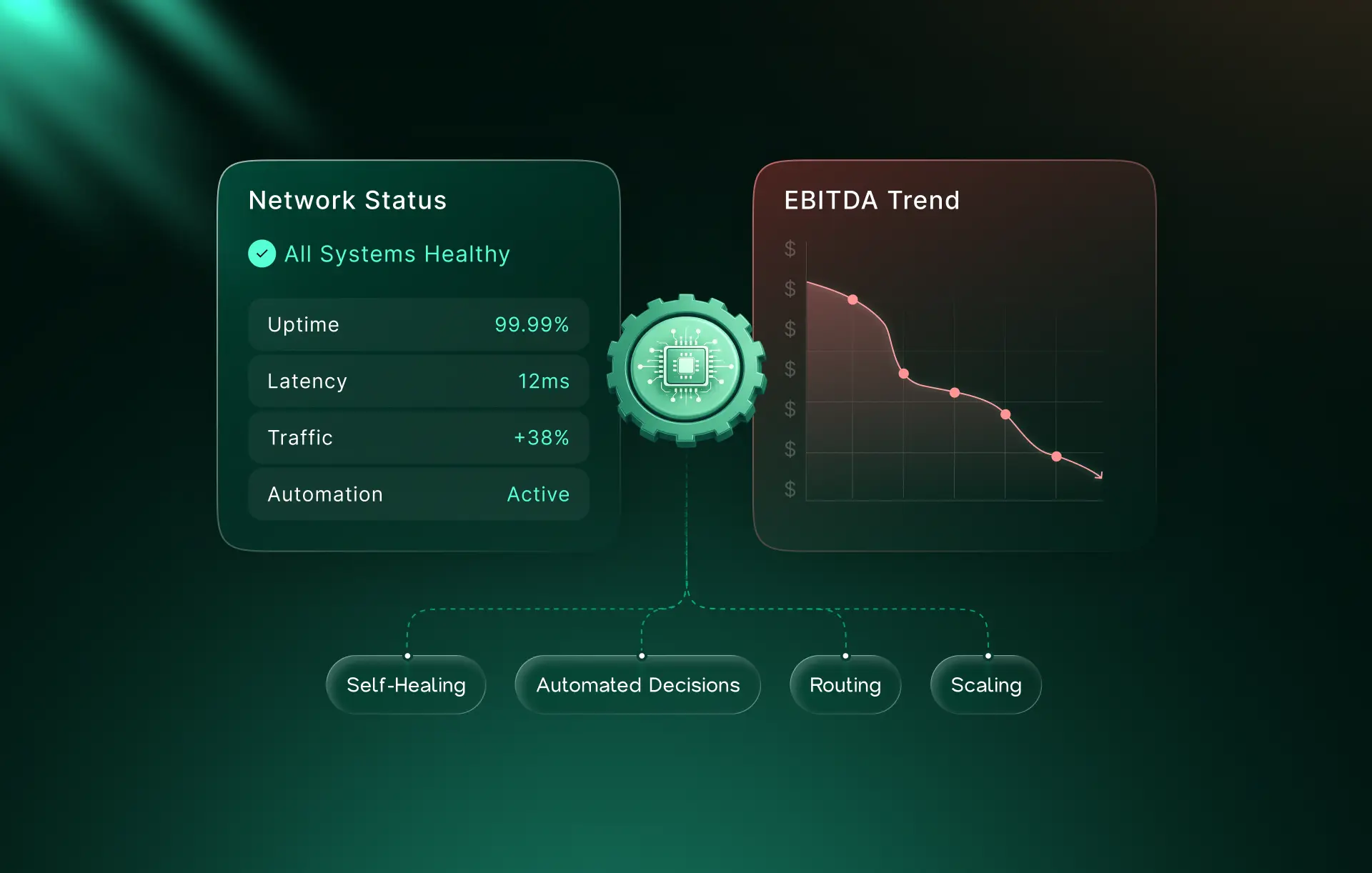
Telecom operators have used AI for years — mostly for automation, routing, and predictive maintenance.
But sovereign AI is not about automating workflows.
It is about controlling the models, the data, and the rules that govern them.
A sovereign AI network means:
- The operator owns the training data
- The operator owns the model
- The operator defines how data moves and who can use it
- Intelligence becomes a product, not a silent backend feature
This model is closely linked to emerging network intelligence APIs, where telecoms transform AI outputs into programmable, monetizable endpoints that enterprises can plug into for security, identity, or routing control. (See how data sovereignty is redefining telecom governance.
This is a direct response to what regulators, enterprises, and cross-industry clients are demanding:
privacy, verifiable governance, and AI-driven control that stays within the region, not a public cloud.
Why are telecom operators moving toward sovereign AI?
Because the business has changed.
Telcos are no longer just carrying traffic.
They are powering finance, healthcare, logistics, government systems, and defense-grade IoT — sectors that cannot rely on foreign AI models.
A bank can’t train fraud scoring on overseas data.
A hospital can’t route patient telemetry through a public model.
A city can’t run autonomous infrastructure on non-sovereign intelligence.
For these industries to trust telecom, operators must prove:
✅ Data stays local
✅ Models are transparent and explainable
✅ AI decisions can be audited, not guessed
✅ Network intelligence is not outsourced to hyperscalers
This is why the shift is happening everywhere at once.
- Europe is building sovereign AI clouds for telecom and defense
- India is localizing telco data and AI for regulated sectors
- The GCC is creating region-run AI models to support smart-nation infrastructure
- Brazil and Singapore are enforcing telecom-AI governance at national level
The message is clear:
Telecom won’t lead the next decade by automating networks. It will lead by governing intelligence.
What risks do telcos face if they don’t own the AI model?
They become vendors in their own market.
If public cloud providers control the AI decision layer, telecom becomes a commodity pipe.
If digital native brands run the orchestration, they capture the value.
If hyperscalers own identity, routing, security, and fraud scoring, the operator loses strategic power.
The result?
Telecom becomes infrastructure.
Software companies become the industry.
This is already visible:
Banks are launching identity platforms.
Automotive brands are building mobility networks.
Fintechs are embedding routing and SIM lifecycle control.
If operators do not control their AI layer, they only rent relevance.
How can telecom operators build sovereign AI platforms?
The strategy emerging globally follows a clear pattern:
1. Build regional AI models trained on telecom-grade data
Traffic behavior
Mobility patterns
Device identity
QoS intelligence
Fraud risk signals
These models cannot be replicated by SaaS companies — only operators possess this data at national scale.
2. Expose these models as services
Enterprises do not want connectivity.
They want identity verification, location intelligence, fraud scoring, edge routing, QoS contracts, and compliance frameworks.
All of these can be sold as AI capabilities instead of SIM plans — powering AI-driven operator economics that scale through usage and intelligence, not infrastructure expansion.
3. Control data governance and explainability
A sovereign AI platform guarantees:
- local storage
- transparent inference
- audit trails
- cross-industry compliance
This is what makes telecommunications trustworthy in regulated industries.
4. Turn the AI layer into a marketplace
Once operators export intelligence through APIs, multiple industries can plug in:
fintech
mobility
IoT
healthcare
logistics
smart cities
This is where margins expand — without putting new towers in the ground.
Why owning the model lifts telecom economics?
A SIM card creates a customer once.
An AI model creates revenue every time it is used.
Identity verification requests.
Fraud scoring calls.
Routing decisions.
QoS allocation.
IoT provisioning.
Device authentication.
Every API call is revenue — without CAPEX, retail cost, or price wars.
Telecom stops scaling by users.
Telecom starts scaling by intelligence consumption.
This is what hyperscalers figured out a decade ago.
Now telecom is entering the same market logic.
(Discover how automation in telecoms is turning Opex into growth.)
What does this mean for operators in 2025–2026?
Owning the model means:
✅ Higher enterprise stickiness
✅ Recurring API revenue
✅ Platform margins instead of connectivity margins
✅ Network intelligence that cannot be copied
✅ A defensible moat against hyperscalers and OTT apps
Owning the model turns a telecom network into an industry platform.
The TelcoEdge Perspective
We believe the next era of telecom will not be owned by the operators with the biggest towers, most spectrum, or lowest tariffs.
It will be owned by the operators who control:
- their AI layer
- their data governance
- their intelligence marketplace
Network ownership built telecom.
Model ownership will protect it.
TelcoEdge is building the sovereign platform layer that lets operators export their intelligence safely — across fintech, mobility, IoT, smart cities, and regulated enterprise ecosystems — with transparency, compliance, and security at the core.
Because in the next decade, the telco that owns the network will survive.
But the telco that owns the model will lead.