

What a Modern Telco Stack Looks Like (And Why It Matters)
Telco Is No Longer Just Infrastructure
Telecom is evolving—from towers and SIM cards to APIs and experience layers.
Today’s most successful MVNOs and digital telcos aren’t defined by how much bandwidth they sell, but by how intelligently they sell it. They’re not just carriers; they’re service companies, data-driven brands, and customer-first ecosystems.
And it all comes down to what’s under the hood: the telco stack.
This blog breaks down the components of a truly modern telecom stack—and why it’s the difference between scale and stagnation
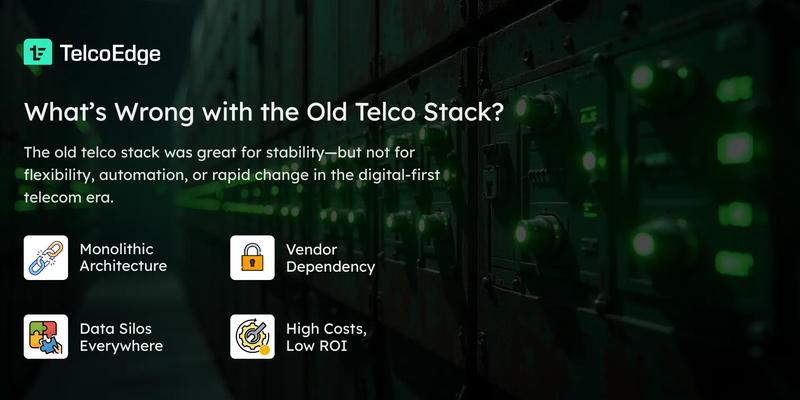
What’s Wrong with the Old Stack?
Legacy telco stacks were:
- Monolithic: tightly coupled systems that don’t scale or adapt
- Vendor-dependent: change requests take weeks, upgrades take months
- Siloed: data trapped across billing, CRM, and provisioning
- Expensive: high Capex and Opex, with slow returns
These systems worked for a time—but not for digital-native brands that want to move fast, personalize, and scale globally.
The Core Layers of a Modern Telco Stack
✅ 1. Modular Architecture
Build what you need. Add what you don’t yet. Each function is pluggable—not hardcoded.
✅ 2. API-First Backbone
Every tool (billing, checkout, support, provisioning) is API-ready—built for integration, automation, and scale.
✅ 3. Real-Time Analytics Layer
Instant insights across churn, usage, ARPU, LTV. No more waiting for static reports.
✅ 4. Embedded AI Agents
AI that powers real-time support, predictive churn reduction, and smarter workflows—right out of the box.
✅ 5. Unified Ops Dashboard
No more 5 tools to run one telco. One interface to manage billing, activations, CRM, analytics.
What It Enables (That the Old Stack Can’t)
With a modern stack, telcos can:
- Go live in days, not months
- Launch new plans, upsells, or bundles instantly
- Activate eSIMs in seconds
- Route support queries through AI, not ticket queues
- Experiment with pricing and promos without dev tickets
- Expand globally with multilingual support + multi-currency billing
In other words: less tech debt, more customer value.
Real Talk—Modern Stacks Reduce Risk
Going modern isn’t just about speed—it’s about reducing:
- 💸 Opex: through automation
- ⏳ Time-to-market: through no-code tools
- 🤝 Vendor risk: through open architecture
- 📉 Churn: through better CX and personalization
You’re not just upgrading software—you’re future-proofing your telecom business.
The Stack You Build Is the Brand You Become
In 2025 and beyond, your telco stack won’t just support operations—it will define your brand.
Are you flexible? Fast? Frictionless? Or stuck in the past?
The good news? You don’t have to rip and replace everything. You just have to start building smart.