

Why Does Scalability Alone Fail Telcos?
Because scalability only measures volume, not resilience. Legacy BSS platforms were built to grow traffic, not to handle change.
They’re like fortresses — strong but rigid. They “scale like machines” until a market shift breaks them. Every new regulation, pricing model, or customer segment forces duct-taped workarounds that trap operators inside “enterprise-caged” systems.
TelcoEdge doesn’t scale for volume alone. We designed our architecture to flex with change — not collapse under it.
What If Scale Was About Change-Readiness Instead of Load?
True scale means evolving with the market, not just adding capacity.
Imagine an MVNO that suddenly enters a new region. Compliance frameworks differ. Device adoption shifts overnight. A rigid backend needs months of dev time. An adaptive backend adjusts in days.
TelcoEdge was built to adapt intelligently — letting ops reconfigure workflows without waiting for full-stack rebuilds.
How Do We Build Adaptability Into the Core?
By making adaptability a design choice, not an afterthought.
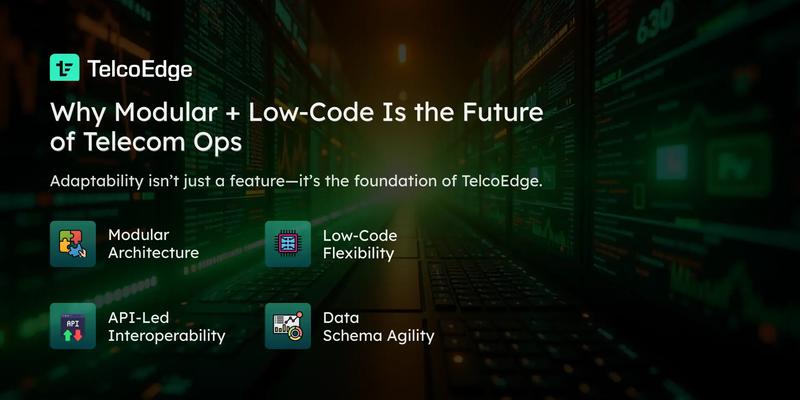
Modular Architecture → swap or rewire without full reboots
Low-Code Flexibility → ops teams adapt workflows independently
API-Led Interoperability → no vendor lock-in, faster integrations
Data Schema Agility → categories evolve as customer needs evolve
These principles let TelcoEdge turn scale into translation: market shifts become opportunities, not threats.
Why Will Adaptability Outlast Scalability in the Next 5 Years
Because the industry isn’t facing traffic problems — it’s facing transformation problems.
- Global policy shifts (data, roaming, AI governance)
- Device revolutions (eSIM-first adoption, IoT connectivity)
- Market fragmentation (hyperlocal MVNO models, niche carriers)
Scalability won’t solve these — adaptability will.
TelcoEdge isn’t built just to survive today’s scale. It’s built to reinvent for tomorrow’s market shifts.