


What Is the Telco API Economy and Why Are Brands Moving Toward It?
There was a time when telecom growth meant selling SIM cards, phone plans, and data packs. But the market has changed faster than the business model. Startups want embedded connectivity solutions without touching network infrastructure. Fintechs want identity verification without building KYC stacks. Mobility brands want real-time routing without becoming MVNOs.
In 2025, all of this is happening through APIs — not contracts, hardware, or physical distribution.
Connectivity has gone from something you buy, to something you plug in.
How Do Telecom APIs Work for Fintech, Mobility, and IoT Brands?
Because businesses care less about owning telecom infrastructure, and more about using telecom intelligence to power their own products through API-based telecom services.
A fintech doesn’t want a SIM card.
It wants instant device identity, fraud scoring, and two-factor authentication for users in multiple countries.
A mobility platform doesn’t want to launch a network.
It wants real-time location accuracy, QoS on the move, and edge routing for vehicles.
An IoT manufacturer doesn’t want carrier contracts.
It wants lifecycle control, remote provisioning, and global roaming on a single dashboard.
What telecoms used to build for themselves, brands now buy as services on demand, a true connectivity as a service model that scales without infrastructure ownership. ( See how the shift to an API-first telco stack turns legacy networks into programmable business platforms.)
What Telecom Capabilities Are Being Delivered as APIs?
This shift is already visible worldwide. Operators are exporting capabilities that used to be locked inside the network, enabled by programmable telecom networks and network programmability in telecom innovation:
- Identity & SIM authentication
- Fraud scoring and device reputation
- Location data and mobility insights
- Usage analytics and real-time QoS
- eSIM activation and provisioning
- Billing, charging, and compliance frameworks
Instead of competing on who has the cheapest plan, operators compete on who has the smartest capabilities.
And the business model changes completely:
More integrations, fewer churn cycles.
More platform revenue, less price dilution.
More recurring API calls, fewer prepaid top-ups.
( Discover how turning network APIs into standalone products is reshaping telecom revenue models.)
Which Operators Are Leading the Telco API Shift Globally?
A few signals tell the story:
- Rakuten Symphony sells automation and network intelligence to operators across multiple countries
- Vodafone is exposing identity, security and IoT capabilities through API marketplaces
- e& (UAE) is offering fintech, cybersecurity and analytics services to enterprises
- Telefónica lets developers consume network functions like programmable components
They’re not just operators — they’re marketplace platforms or telecom automation platforms where any brand can consume telecom intelligence as software.
And when telecom behaves like software, the business scales like software. ( Learn how automation transforms telecom’s Opex burden into a scalable growth engine for API-driven operators.)
What Can Telco APIs Actually Provide Beyond Connectivity?
A SIM card can be sold once.
A network capability can be sold endlessly.
APIs let operators monetize:
- without building more towers
- without new retail footprints
- without subsidy-driven growth
- without fighting price wars
Every time a brand triggers:
- a verification check
- a device activation
- a location call
- a routing request
- an IoT provision
…the operator earns. Creating a new path for telecom data monetization and sustainable API-driven growth.
This is why telcos worldwide are redesigning themselves as programmable, not physical businesses.
Why This Model Changes Telecom Economics?
If connectivity is an ingredient, brands don’t need to become telecom companies.
They can embed telecom logic directly into their products.
A bank can onboard users in seconds using telecom identity.
A delivery platform can route fleets using real-time network data.
A consumer app can switch users from prepaid to subscription inside the UI.
A hardware company can activate thousands of devices globally with one API call.
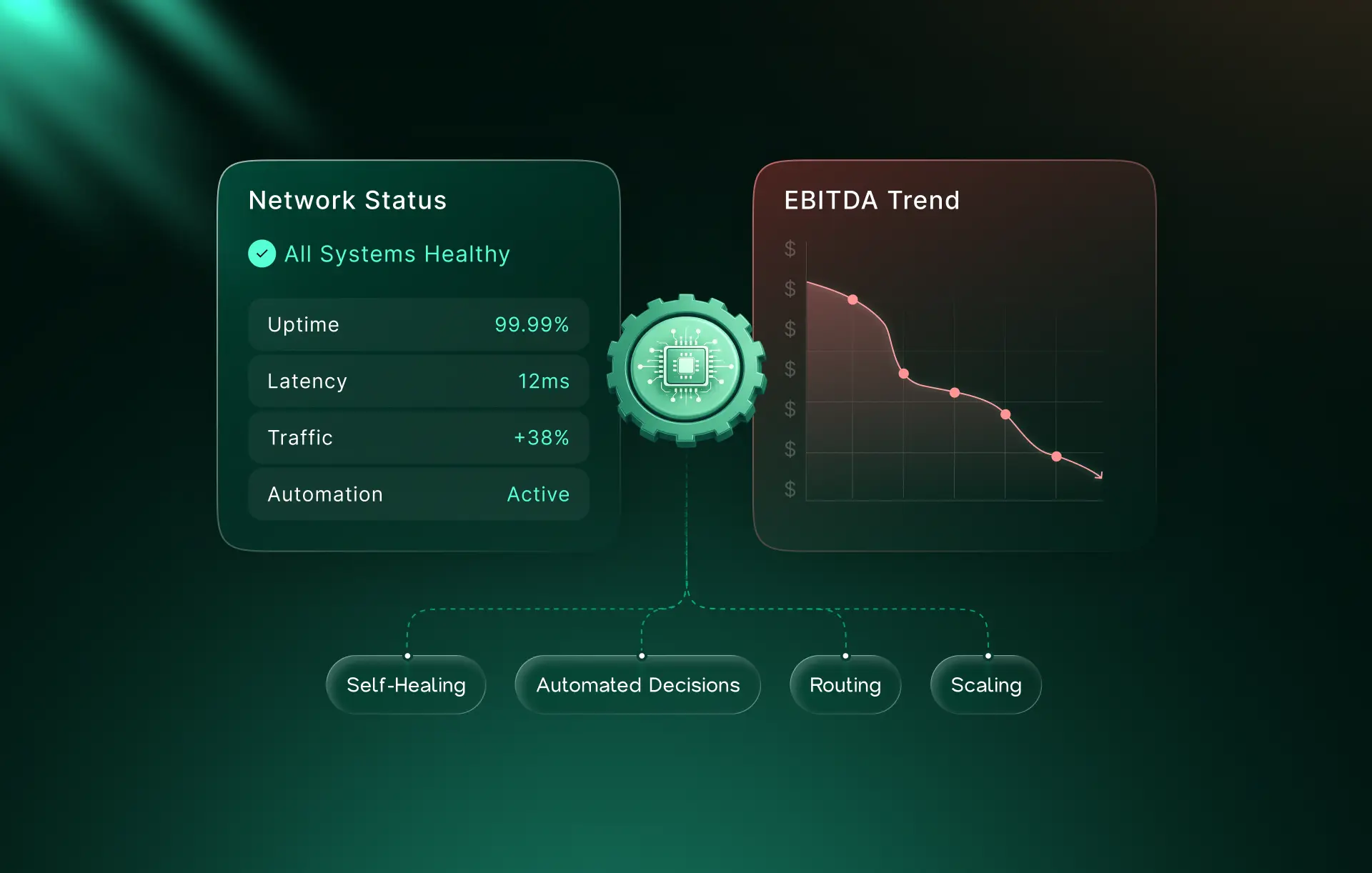
AI is also accelerating this transformation — AI in telecom networks is enabling predictive orchestration, smarter APIs, and real-time optimization across operators.
Telecom finally becomes invisible — and that is exactly why it becomes valuable.
Is Telecom Becoming a Marketplace Model?
We believe the operators who win this market won’t be the ones selling the most data.
They’ll be the ones whose capabilities get used the most.
Connectivity was ownership.
The API economy is access.
And access scales faster.
At TelcoEdge, we’re building the platform layer that helps operators move into this future—where intelligence is exported, brands build on top of the network, and telecom becomes a marketplace economy by default.
Because the next leap in telecom won’t be about who connects the world.
It will be about who powers what the world builds on that connection.