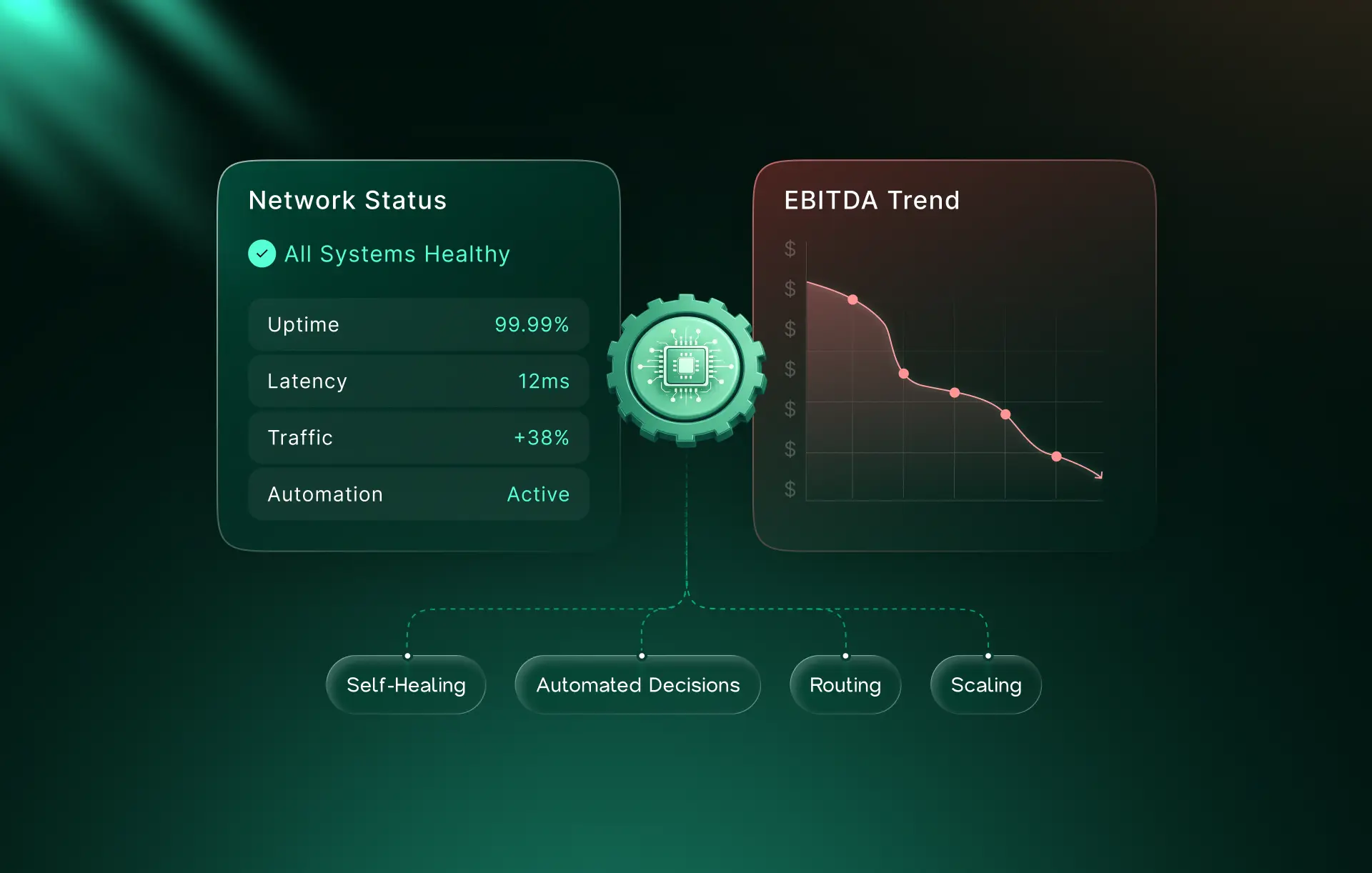



The Rise of Software Telcos
For decades, telecom growth followed a straight line: build infrastructure, add users, scale revenue. But this model is reaching its limits. Margins are shrinking, customer loyalty is falling, and connectivity has turned into an invisible commodity — expected, not valued.
This is why operators worldwide are shifting from selling network access to selling programmable capabilities, delivered the same way software scales: through APIs integration, platforms and reusable intelligence layers. This shift is now reshaping how telecom API monetization works across the industry. (See how an API-first telco stack reshapes this shift.)
In other words, telcos aren’t just upgrading networks.
They are turning into software companies with towers.
Why Subscriber-Led Telecom Growth Is Failing?
Subscriber-led growth no longer works:
- Connectivity looks identical across providers
- Users switch instantly if prices dip
- Retail and distribution costs stay high
- OTT platforms own the customer relationship
- Every new generation of network increases Opex
Operators discovered the same problem cloud providers faced years ago:
Infrastructure alone doesn’t scale profitably. Intelligence does. (Explore how AI-led BSS is driving the intelligence layer.)
How Software-Led Telcos Monetize APIs?
Modern operators are no longer defined by spectrum and coverage.
They are defined by how programmable telecom networks become the foundation for delivering capabilities on demand.
A software-led telco exports:
- identity verification
- device authentication
- network QoS and prioritization
- fraud scoring
- location intelligence
- eSIM provisioning
- billing and charging as services
These are not telco “features.”
They are products that enterprises consume on demand.
Every API call becomes revenue.
Every integration becomes recurring usage.
A single capability can be sold thousands of times without linear cost.
This is why operators are shifting from:
network ownership → network monetization
traffic → intelligence
users → ecosystems
subscriptions → transactions
(See how network APIs become revenue engines.)
How 5G and AI Are Rewriting Telecom’s Business Model?
Three forces collided at once:
1- 5G-Advanced + Satellites + Edge Compute
Created complex networks that require automated intelligence, not manual operations.
2- Enterprise demand for embedded connectivity
Fintechs, IoT manufacturers, EV platforms and supply chain tech want telecom services without becoming operators.
3- Falling pricing power
Data plans became interchangeable.
But telecom intelligence and AI-driven capabilities are not.
Especially as enterprises now look for AI solutions for telecom to power automation and decisioning.
When a telco exports identity scoring or SLA guarantees, there is no race to the bottom — because not every operator can deliver it.
How Does Platform Revenue Work for Operators?
A SIM card is sold once.
A capability is sold endlessly.
A traditional plan is revenue-per-user.
A platform model is revenue-per-use-case.
Instead of asking:
“How many subscribers do we have?”
Operators now ask:
“How many products are being built on top of us?”
This turns telecom into a multi-industry engine:
- Fintech onboarding
- Smart logistics
- Industrial IoT
- Connected mobility
- Retail intelligence
- Healthtech routing
- Smart city automation
And unlike prepaid plans, platform revenues compound.
How Leading Telcos Are Proving the Platform Model Works?
The platform model isn’t theoretical — it’s already being executed by operators that treat their networks like programmable software layers:
- AT&T (US) is exposing network programmability and quality-on-demand through its Network API portfolio, enabling developers to embed network intelligence directly into their apps.
- DT (Deutsche Telekom) is commercializing programmable network capabilities across Europe, investing heavily in API marketplaces and developer ecosystems.
- KDDI (Japan) is turning 5G, edge compute and device intelligence into enterprise-facing software products powering robotics, mobility and IoT automation.
- Orange is building multi-country API frameworks, bringing identity, security, and quality-of-service APIs under a unified, cloud-like model.
- Singtel (Singapore) is evolving into a data and intelligence platform, exporting analytics, cybersecurity and enterprise automation services beyond traditional connectivity.
These operators reflect a global shift:
telecom revenue is moving from access to intelligence and from subscribers to software-driven ecosystems.
Why Programmable Networks Drive the Future of Telecom?
- Networks become programmable instead of static
- Capabilities become products
- Developers become customers
- Partners become revenue streams
- Margins grow without adding towers, SIMs or retail costs
This is telecom without physical friction.
The Challenge: Most Operators Still Think Like Utilities
Many operators upgraded technology, but not the business model.
They built APIs, but not marketplaces.
They modernized networks, but not monetization.
They automated operations, but not products.
A utility sells access.
A platform sells possibilities through a scalable telco platform business model.
The TelcoEdge Perspective
At TelcoEdge, we believe the future is not defined by who owns the network, but by who makes it programmable.
When operators become platforms, every new enterprise becomes a revenue multiplier, every use case becomes a product, and every API call becomes recurring value.
Because telecom doesn’t scale by adding subscribers anymore —
it scales by powering what the world builds next.